
What Does a Disaster Response Sanitation Setup Actually Include?
Most disaster jobs in Rialto need three things at once: toilets, water, and a way to wash hands. That means pairing standard portable toilet rental units with a handwashing station rental or two, plus a holding tank rental if the sewer connection is compromised. OSHA 1926.51(a)(1) requires an adequate supply of potable water at any place of employment, and that rule does not pause because a disaster knocked out the water main. OSHA 1926.51(c) sets the toilet and sanitation baseline crews must meet even when normal facilities are knocked out, and if crews are later applying coatings, herbicides or insecticides during rebuild work, OSHA 1926.51(f)(1) requires washing facilities for that specific exposure. We have staged trailers for shelters, staging yards, and command posts across Rialto, and the setup differs by site: a shelter needs ADA units, a debris yard needs dumpsters, a command post needs a clean restroom trailer. Our emergency porta potty rental page covers turnaround times in more detail. For agencies running multi-day operations, a portable restroom rental contract with a fixed weekly service beats piecing it together unit by unit, because ANSI/PSAI Z4.3 sets one service visit per week for up to 10 users over a 40 hour week as the baseline, and disaster crowds blow past that fast.
How Fast Can Units Reach a Disaster Site in Rialto?
Distance drives response time more than anything else. Rialto Porta Pros already services routes into Muscoy, 6.0 miles northeast, and Colton, 8.0 miles southeast, so mutual aid staging near those corridors does not start from zero. Highland sits 15.8 miles east, and if a response spans that far, we treat it as a second delivery zone rather than an add-on stop. A roll-off delivery needs about 60 feet of straight clearance behind the truck, which matters when a disaster has left debris, downed trees or damaged fencing blocking the usual pull-in. If your site has narrow access, tell us before the truck rolls, not after. We also run temporary fence rental to secure a perimeter around debris piles or damaged structures, and crowd control barrier rental for shelter intake lines. Debris removal itself usually needs a roll-off dumpster rental, and our construction dumpster rental page covers the sizes that move storm debris fastest. If the disaster is agricultural, a barn fire or flood on farmland outside the city core, OSHA 1928.110 requires field sanitation at one facility per 20 hand-labor employees within a quarter mile walk, which is the standard we plan around for those sites; see our farm and agricultural restrooms page.
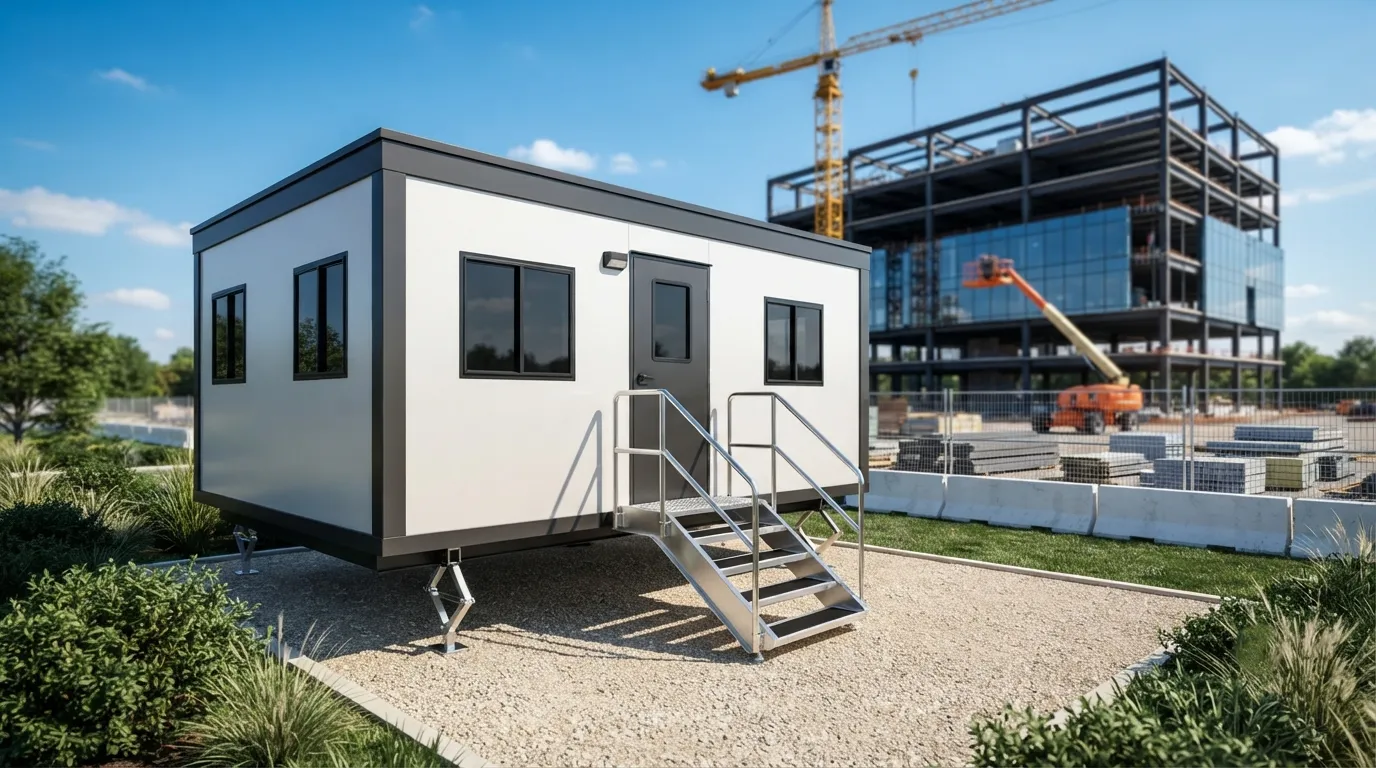
Do Disaster Relief Sites Need ADA-Accessible Units?
Yes, ADA Standards section 213.2 requires at least 5 percent of clustered single-user toilet units be accessible, with a minimum of one, and shelters serving displaced residents almost always trigger that minimum. An ADA accessible porta potty unit needs a 60 inch turning circle under ADA Standards section 304.3.1 and a clear route at least 36 inches wide per ADA Standards section 403.5.1, so placement on gravel or debris-covered ground takes planning. ADA units run $200 to $400 a day depending on term length, cheaper by the week. We also stock restroom trailer rental units for longer sheltering operations, since a trailer holds up better than stand-alone units when hundreds of people are cycling through a site daily. If handwashing is part of the shelter plan, 29 CFR 1910.141(d)(2) requires soap and towels or a hand-drying device at washing stations, not sanitizer alone, and our portable sink rental units meet that standard. Storage for donated supplies or displaced equipment often comes up too; a storage container rental or mobile office trailer rental can double as a command post once toilets and water are handled.
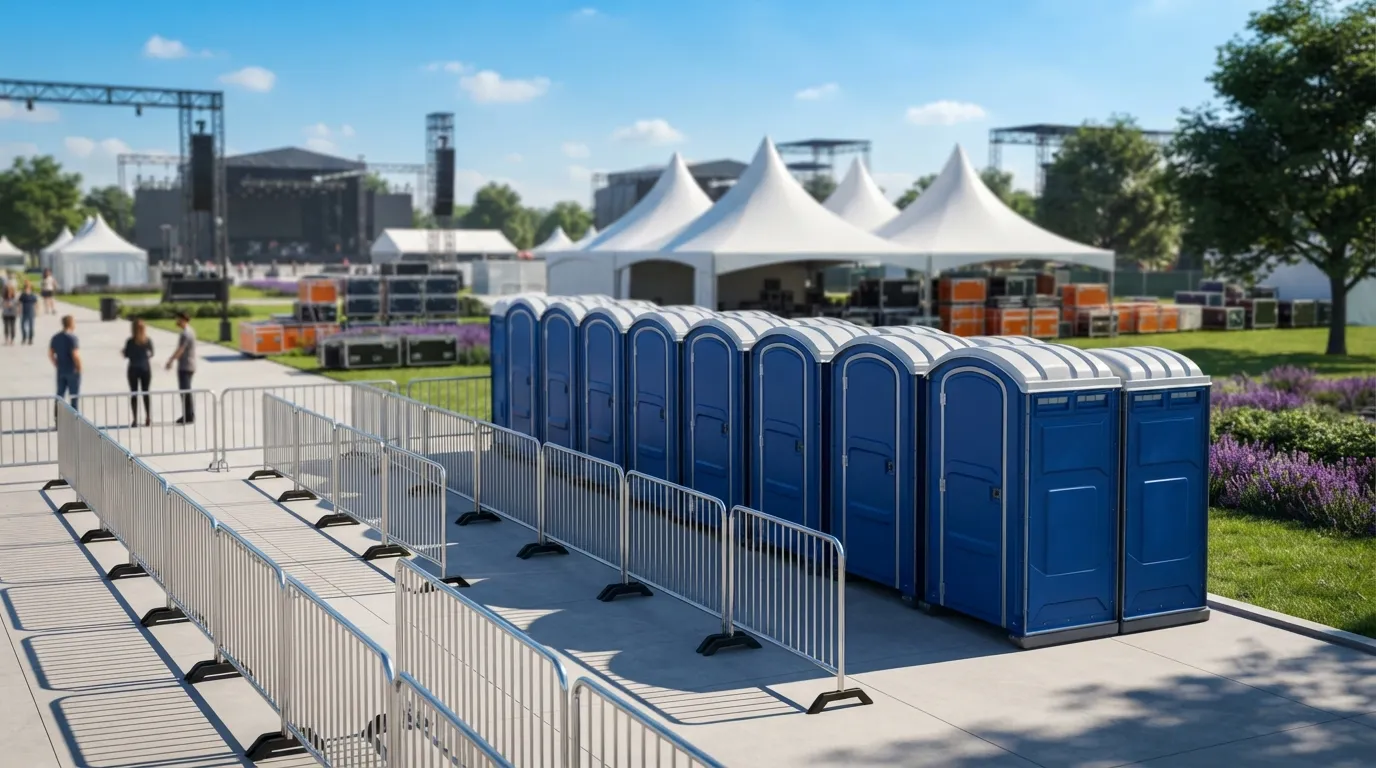
Pricing for Disaster Response Units
| unit | duration | typical price |
|---|---|---|
| standard toilet | day | $150 |
| standard toilet | week | $200 |
| ADA unit | day | $230 |
| ADA unit | week | $185 |
| restroom trailer | week | $1,397 |
| dumpster | week | $600 |
Longer deployments cost less per day than short ones, which is why most disaster contracts in Rialto convert to weekly billing within 48 hours. See porta potty rental cost and monthly porta potty rental for how the math works past week one.
How many toilets does a shelter need?
It depends on headcount, not square footage. OSHA 1926.51(c)(1) sets one toilet for 20 workers or fewer, scaling up from there, and shelters tend to exceed that ratio fast once families arrive. Use our how many porta potties do I need guide to size it before units arrive.
Can you deliver before a storm hits?
Yes, if warnings give enough lead time. We stage units ahead of forecasted flooding or wildfire evacuation zones when possible. Once roads close or access narrows, delivery slows, so earlier calls get priority placement in Rialto and nearby corridors.
What if the sewer line is damaged?
A holding tank replaces the connection entirely. Our 60 to 70 gallon standard tanks work for smaller crews, while larger holding tanks handle shelter-scale volume. Check holding tank rental for tank sizing against expected headcount.
Do you provide handwashing stations separately?
Yes, they rent independently of toilets. Disaster sites often need more handwashing capacity than toilet capacity, especially during cleanup phases involving paint, coatings or pesticide treatment, which triggers OSHA 1926.51(f)(1) washing requirements directly.
How quickly can you respond to an active disaster in Rialto?
Same-day delivery is common when access roads are clear. Response time depends on debris blocking routes and how many other agencies are requesting units simultaneously. Call ahead with site access details through our contact page to speed dispatch.
Next step
Get a delivery date
Tell us the address, the dates and the headcount. We size the order and confirm the route.