
Permit rules for portable toilets and dumpsters depend on where the unit sits. A porta potty placed entirely on private property, away from the sidewalk and street, typically does not need a city permit, and most jobs need zero permits if the unit stays 5 feet or more off any public walkway. Anything placed in the public right of way is a different question, and that placement needs confirming with the City of Rialto before delivery day. The same right-of-way logic applies whether you are asking about delaware porta potty rental rules or portable toilet rental delaware, since every city sets its own curbside line, and it holds true here for Rialto too.
Do You Need a Permit for a Porta Potty in Rialto?
Most residential and commercial jobs do not need a permit if the unit sits on the property, clear of the sidewalk, driveway apron and street. That covers a home remodel with a unit in the driveway, or a backyard party rented through event restroom rental. Where it gets murkier is street frontage. If your lot has no room and the only spot is curbside, Rialto Porta Pros recommends checking with the city before you commit to a placement, since right-of-way rules are NOT something we can confirm from here. Construction sites usually fall under a different bucket entirely, tied to the building permit itself and covered separately on porta potty permit requirements, with porta potty rules and regulations planning done early, alongside a look at construction site services. If you are unsure which category your job falls into, call before the delivery truck is scheduled. It costs nothing and it avoids a unit sitting on a flatbed while you sort it out.
Do You Need a Permit for a Dumpster on the Street?
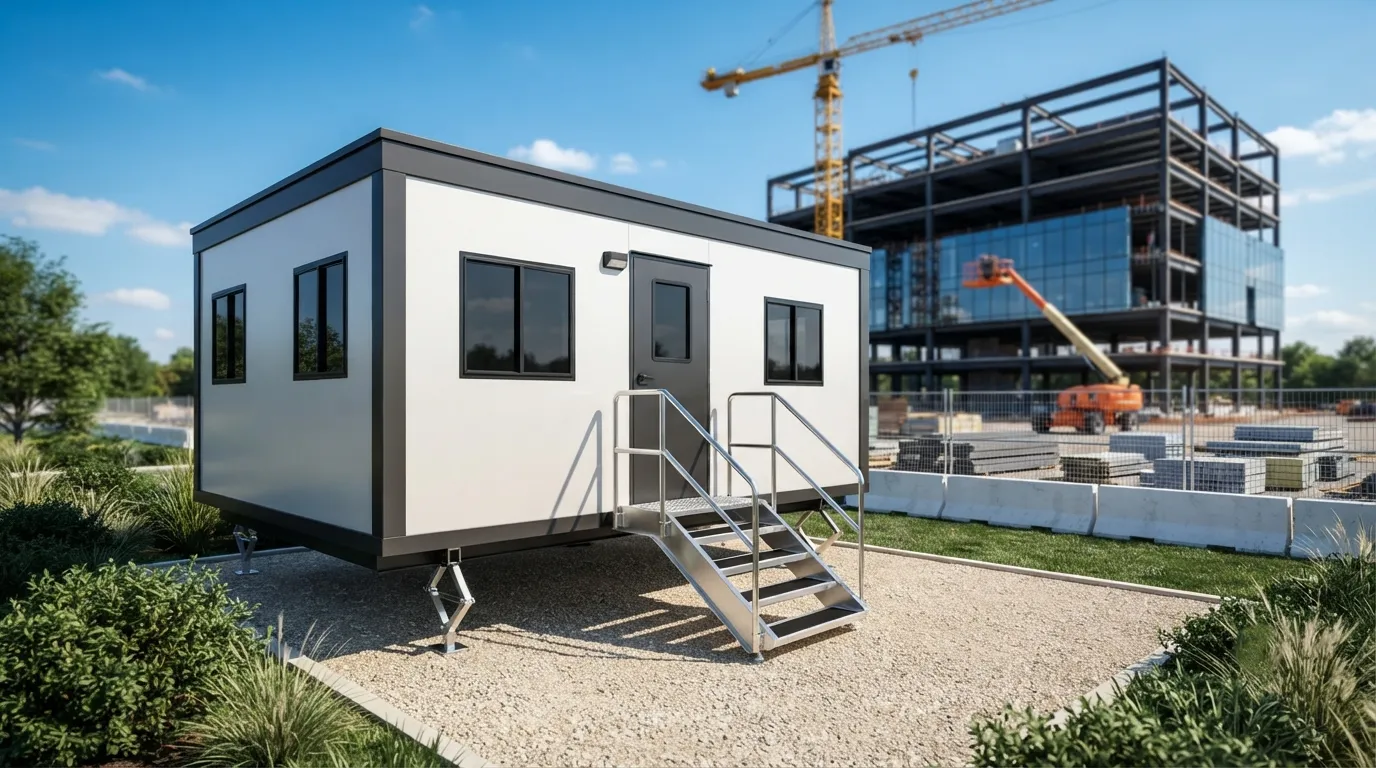
Same logic as roll-off dumpster rental delaware or any other market: a dumpster staged on your own driveway or yard is usually fine without a permit, similar to how a jersey city dumpster permit is only triggered by street placement, not a private pad. A dumpster on the street, blocking a lane or parking, is the scenario that needs a permit for a dumpster on the street in most cities, Rialto included, and that is a city call, not ours. This matters more than people expect, because a roll-off dumpster rental needs about 60 feet of straight clearance behind the truck for delivery and pickup, and that clearance sometimes only exists in the street itself. Before ordering a 10 yard dumpster rental, 20 yard dumpster rental, or anything larger, walk the site and figure out where the truck actually needs to swing. If the answer is "the street," treat it as a permit question, not an afterthought. Full detail on sizing and clearance lives on dumpster sizes and dimensions, and the general permit picture is covered at dumpster permit requirements.
What Are the Porta Potty Placement Rules?
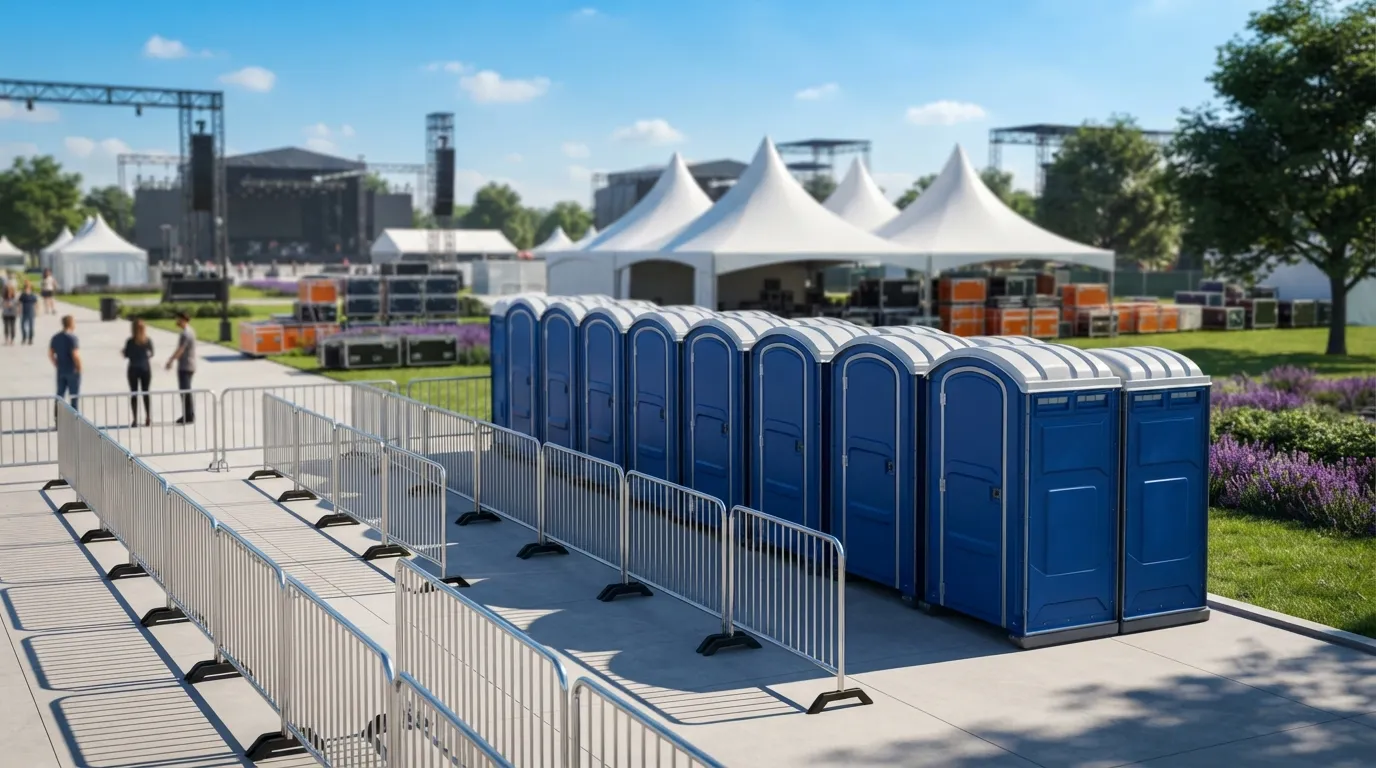
Placement rules exist for access and safety, not just aesthetics. ADA Standards section 403.5.1 sets a minimum 36 inch clear route to any accessible unit, and section 404.2.3 requires at least a 32 inch clear door opening on the unit itself. Where several single-user units are grouped, ADA Standards section 213.2 requires at least 5 percent to be accessible, and never fewer than one, which is why job sites with more than a handful of standard units also order at least one ADA accessible porta potty. Ground under the unit needs to be stable and slip resistant per ADA Standards section 302.1, so gravel or a level pad beats soft dirt or grass. On a construction site, OSHA 1926.51(c) sets the toilet count itself: one facility for 20 workers or fewer, scaling up from there. For guidance on how that math works out on your crew size, see how many porta potties do I need and the fuller breakdown at OSHA portable toilet requirements.
Are There Rules for Handwashing Stations and Water?
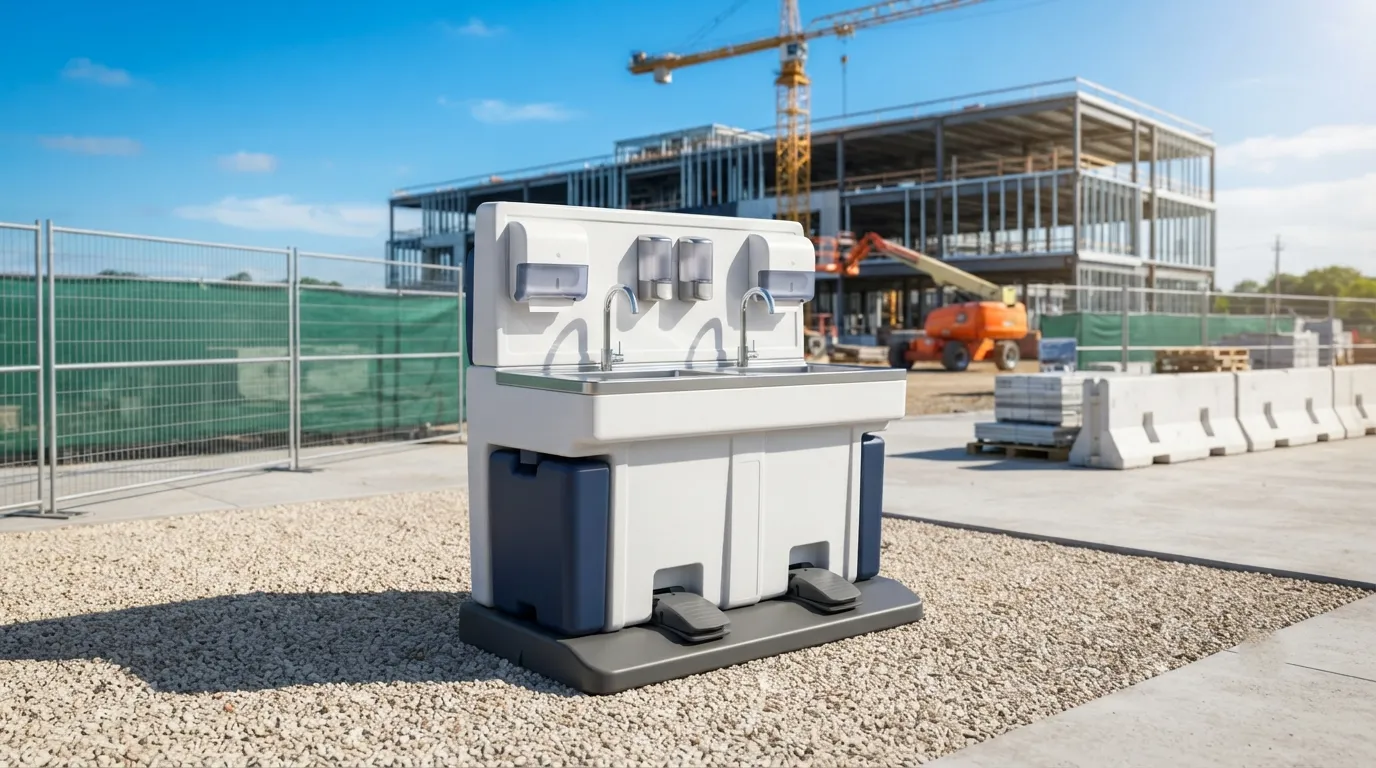
Yes, and they are separate from the toilet count. OSHA 1926.51(a)(1) requires an adequate supply of potable water at any place of employment, which is why most job sites pair units with a handwashing station rental or a portable sink rental rather than relying on sanitizer alone. 29 CFR 1910.141(d)(2) is specific: washing facilities need soap and towels or a hand dryer, and hand sanitizer does not satisfy that standard on its own. If the work involves paints, coatings, herbicides or insecticides, OSHA 1926.51(f)(1) kicks in separately, requiring washing facilities for that contaminant exposure specifically, not as a general rule. Farm operations have their own standard, OSHA 1928.110, which sets one facility per 20 hand-labor employees within a quarter mile walk, relevant if you are servicing farm and agricultural restrooms rather than a standard build site. For events needing a step up from a standard unit, a deluxe flushable porta potty or a restroom trailer rental covers both the toilet and the handwash requirement in one footprint.
Local Notes for Rialto Jobs
Rialto sits close enough to several nearby areas that we handle deliveries across the region without much extra lead time, and a temporary power pole permit question comes up often enough on mixed-service jobs that it is worth raising during the same call. Muscoy is about 6.0 miles northeast, Colton about 8.0 miles southeast, and jobs as far as Highland, roughly 15.8 miles east, still fall within normal routing. If your project is a temporary power pole install alongside restroom service, or a job that also needs temporary fence rental or a light tower rental, plan the permit conversation for all of it at once, since some cities bundle power pole and right-of-way approvals together. For a straight answer on your specific address and placement, request a quote and we will flag anything that looks like a right-of-way question before it becomes a delivery-day problem.
Do I need a permit for a porta potty on my own property?
Usually not. A unit kept on private property, clear of the sidewalk and street, typically does not require a city permit in Rialto. The exception is if your site plan puts the unit near a curb cut or public walkway, which is worth a quick call to confirm.
Is a permit required for a dumpster placed on the street?
Often yes, since that is public right of way. A dumpster kept entirely on a driveway or yard usually skips the permit question. Street placement, especially anything blocking a lane, is the scenario to confirm with the city first.
How many porta potties does OSHA require on a job site?
OSHA 1926.51(c) sets one toilet facility for 20 workers or fewer, scaling to one toilet seat and one urinal per 40 workers between 20 and 200, then per 50 workers above that. Crew size and shift structure both affect the real count.
Does a handwashing station need its own permit?
No permit applies specifically to a handwashing station in most cases. It falls under general sanitation planning tied to your OSHA 1926.51(a)(1) water supply obligation, not a separate city approval.
What clearance does a roll-off dumpster delivery need?
About 60 feet of straight clearance behind the truck for the driver to place and pull the container safely. If your site cannot offer that on private ground, the street becomes part of the delivery plan, which brings the permit question back into play.
Next step
Get a delivery date
Tell us the address, the dates and the headcount. We size the order and confirm the route.