
Where should a porta potty go on a job site?
Pick flat, firm ground first. ADA Standards section 302.1 calls for stable, firm, slip-resistant surfaces, and that rule is worth following even on non-accessible units, because a unit rocking on soft dirt tips over or sinks. Leave a path at least 36 inches wide to the unit, matching the clear-route minimum in ADA Standards section 403.5.1, so anyone walking up doesn't have to squeeze past equipment or fencing. Keep units back from temporary fence rental lines by a few feet so the service truck's hose can swing without snagging on chain link temporary fence panels. On a construction lot, place the toilet near the work zone but downwind of the trailer or office, and check the driveway width before delivery day, because a roll-off dumpster rental delivery needs about 60 feet of straight clearance behind the truck, and your porta potty truck needs a similar approach if it's sharing that access. If you're placing several units for a crew, our how many porta potties do i need guide walks through the math, and OSHA 1926.51(c) sets the ratio at one toilet per 20 workers or fewer on a construction site.
What are the porta potty placement rules for accessibility?
ADA-compliant placement means a 60 inch turning circle in front of the unit, per ADA Standards section 304.3.1, plus a door that opens at least 32 inches wide under section 404.2.3. If a ramp is needed to reach the unit, the slope can't exceed 1:12 under section 405.2. When you cluster several standard units at an event or job site, ADA Standards section 213.2 requires at least 5 percent of them to be accessible, and never fewer than one. That's why most Rialto job sites order at least one ADA accessible porta potty alongside standard units rather than trying to retrofit later. Reach controls, like the flush handle on a deluxe flushable porta potty, should sit within the 48 inch maximum and 15 inch minimum reach range in ADA Standards section 308.2.1, and any latch or handle should operate with one hand and under 5 pounds of force per section 309.4. Placement matters as much as the unit itself here: an accessible toilet stuck behind a curb or gravel patch fails the standard even if the unit itself is compliant.
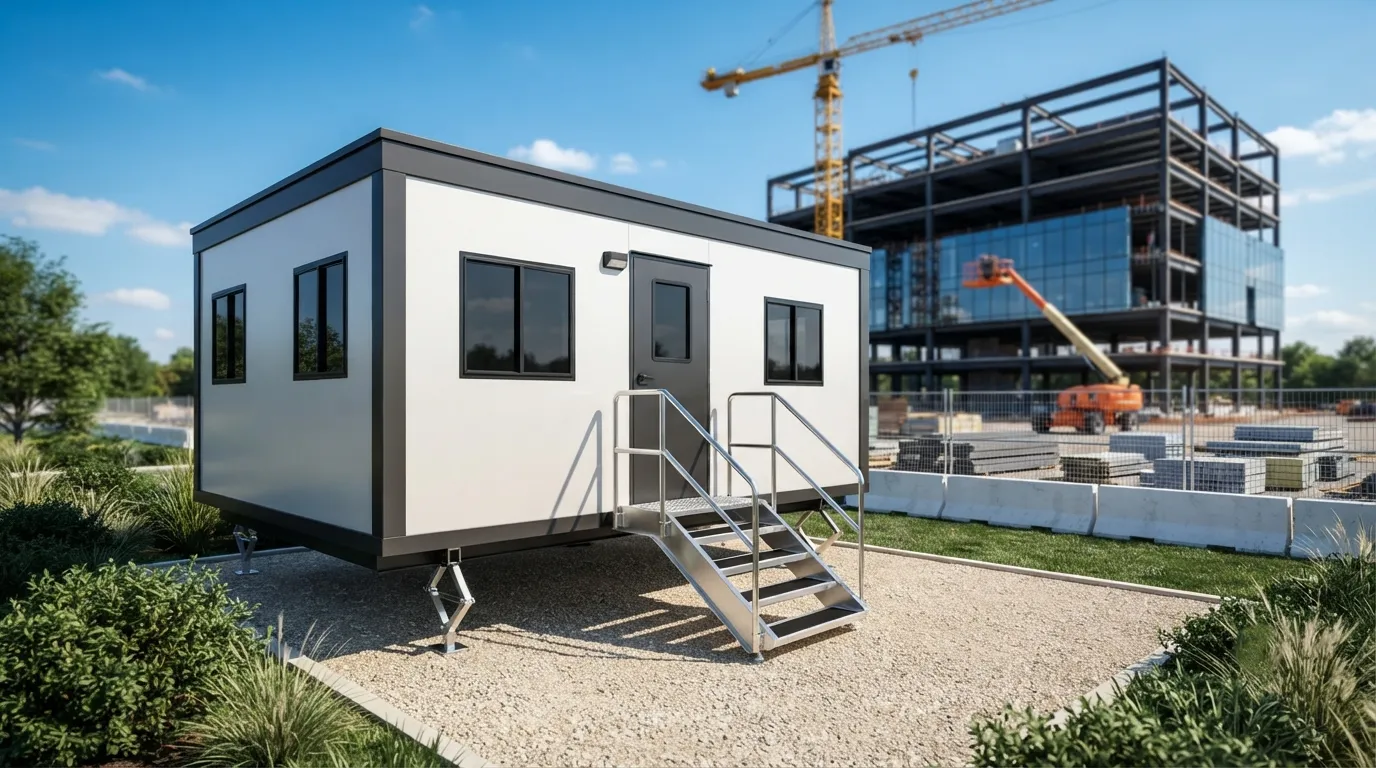
Do I need a permit to place a porta potty or dumpster in Rialto?
Permit rules for placing equipment in the street, sidewalk, or right-of-way vary by situation, and this needs confirming directly with the City of Rialto before delivery day. The same goes for dumpster placement permit cost and requirements, since a dumpster sitting on public property is treated differently than one parked entirely on private land. Our dumpster permit requirements and porta potty permit requirements pages cover what to ask the city, but don't assume a permit isn't needed just because the last job didn't require one. If your project is 8.0 miles southeast in Colton or 6.0 miles northeast in Muscoy, check with that city's office instead, since Rialto rules don't carry over. For most private-lot placements, like a driveway during a home renovation porta potty project or a backyard event, no right-of-way permit is needed at all, but confirm before you plan around that assumption.
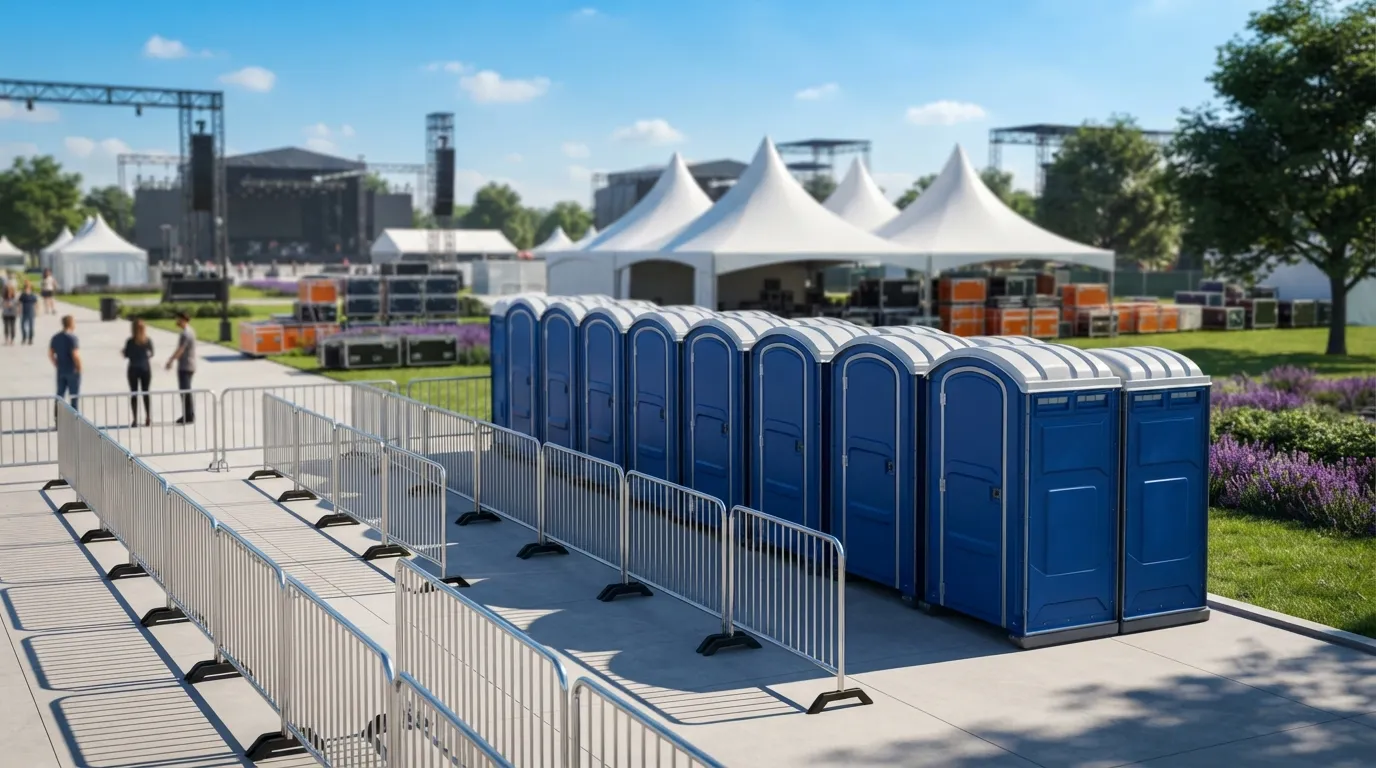
How far from the building should a porta potty or dumpster sit?
Keep enough distance that the service truck can reach the unit without crossing landscaping, parked cars, or a septic drain field. A standard unit runs about 44 by 48 inches on the ground and stands roughly 92 inches tall, so it doesn't need much footprint, but the truck servicing it does. Give a 30-yard or 40 yard dumpster rental more setback than a 10 yard dumpster rental, since larger boxes need a wider swing radius for the roll-off arms. Keep restrooms far enough from doorways that odor doesn't drift indoors, and never place a unit over a septic tank access lid or leach field. If you're also scheduling septic work, that same access matters. A placerville septic pumping service or any pumping company will need the same clearance Rialto Porta Pros needs for a septic pumping service truck, and a typical residential septic tank gets pumped every 3 to 5 years depending on tank and household size. For handwashing stations tied to food service or paint work, remember that OSHA 1926.51(f)(1) applies specifically to washing up after paints, coatings, herbicides or insecticides, not general use, so a plain handwashing station rental covers most job sites without that trigger.
| Placement item | Minimum clearance/spec |
|---|---|
| Clear path to unit | 36 inches (ADA 403.5.1) |
| Door opening | 32 inches (ADA 404.2.3) |
| Turning circle | 60 inches (ADA 304.3.1) |
| Ramp slope | 1:12 max (ADA 405.2) |
| Roll-off truck clearance | 60 feet behind truck |
Can a porta potty be placed on gravel or dirt?
Yes, if the surface is firm and doesn't shift underfoot, meeting the stable-surface standard in ADA Standards section 302.1. Loose gravel over soft dirt can settle unevenly, so tamp it first. Avoid slopes and low spots where rainwater pools around the base.
Where do ozark river portable sink replacement parts fit into placement planning?
Replacement parts matter for upkeep, not placement, but a portable sink rental still needs the same firm, level ground as a toilet unit. Keep the sink near handwashing needs, not tucked behind equipment where crews won't use it.
Do mobile office trailer replacement doors affect where I can place a trailer?
A trailer with a damaged or replaced door still needs the same site prep: level ground and clear approach. Talk to your mobile office trailer rental provider about door condition before placement, since a door that doesn't seal affects security and weather protection on site.
How many porta potties does a Rialto construction site need?
OSHA 1926.51(c) sets one toilet per 20 workers or fewer, scaling up from there. Crew size, shift length, and site layout all factor in. Our OSHA portable toilet requirements page breaks down the full ratio table.
Should I place a handwashing station next to every porta potty?
It's common practice, though not always required. 29 CFR 1910.141(d)(2) calls for soap and towels or a hand-drying device at washing stations, not just sanitizer. Pair units at high-traffic sites like event restroom rental setups.
Next step
Get a delivery date
Tell us the address, the dates and the headcount. We size the order and confirm the route.